FileBlog
What a cross-default clause means when one site goes quiet
A cross-default clause says that a default on one loan is a default on others held by the same borrower, guarantor, or affiliated entity group. It's standard language in most construction loan agreements once a sponsor has more than one facility outstanding with a lender, and it exists for an obvious reason: if a borrower can't service debt on project A, the lender has no interest in pretending project B is fine just because the payments on B are current.
The clause itself is boilerplate. What makes it dangerous is the lag between the event that triggers it and the moment anyone on the lender's side finds out.
Why one quiet site becomes everyone's problem
Say a borrower has three active construction loans with your shop. Site one stalls, no crane movement, no deliveries, the super stops answering the draw inspector's calls. That's a covenant event on its own: most construction loan covenant packages define default to include abandonment, cessation of work for a stated number of consecutive days, or failure to maintain the approved schedule. None of that requires a missed payment.
Here's where the cross-default clause does its work. The moment site one trips its own covenant, the same clause that sits in the loan documents for sites two and three can put those facilities in technical default too, even though the borrower is current on payments there and the work on-site looks completely normal. A workout officer who's only watching the loan that's visibly sick can miss that the healthy-looking ones just became distressed on paper.
This is the scenario that makes "I'll find out when the borrower tells me" an expensive strategy. Borrowers have every incentive to delay that call. A sponsor juggling three facilities from one lender knows that flagging trouble on site one puts the other two in play. The quarterly progress report, the draw request narrative, the phone update from the project manager: all of it runs through people who benefit from the lender finding out as late as possible.
What a stalled-site flag actually catches
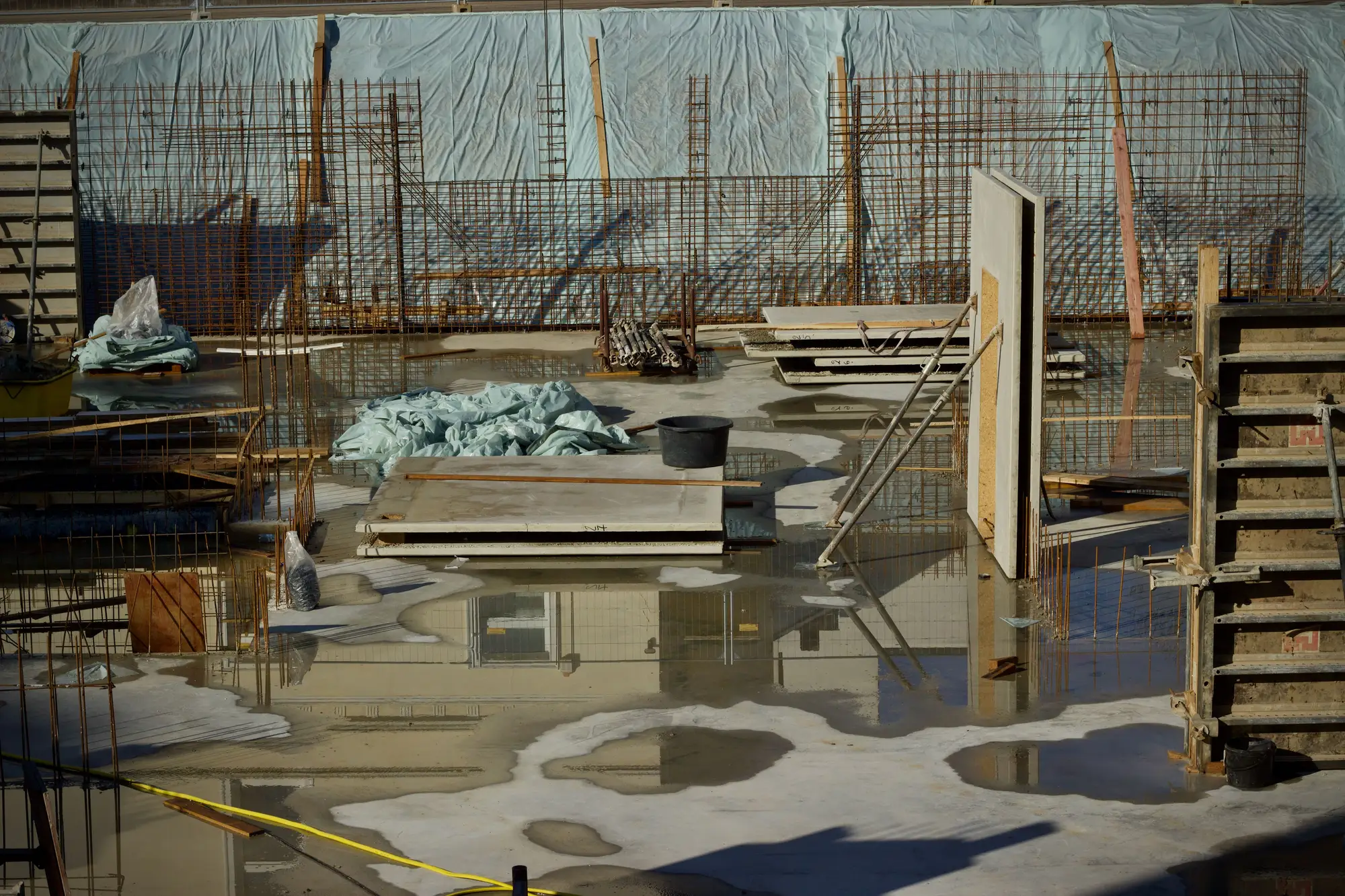
The things that trigger a cessation-of-work default are visible from above, whether or not anyone tells you about them. No plant on site where there was plant last month. No change in the building envelope between passes. Water sitting in an excavation that should have been backfilled or poured weeks ago. These are the physical signatures of a job that's stopped, and they show up on the ground well before a borrower's narrative does, if it ever does at all.
A monthly pass over every active site in the portfolio catches that signature independent of what the sponsor chooses to report. For a workout officer managing a book where one borrower touches several facilities, that's the difference between catching a cross-default trigger in the same reporting cycle it happens and finding out about it two quarters later, after the borrower has already drawn against the other loans and the collateral position has moved.
The portfolio math workout officers actually care about
Underwriting one stalled site is a single-loan problem: appraisal, lien position, completion cost, maybe a receiver. Underwriting what a stalled site does to the other loans in the same sponsor group is a portfolio problem, and it's the one that gets missed because nobody's systematically watching every active site for a standstill signal at the same time. Insurers watching builder's risk exposure and contractors tracking re-tender openings have the same blind spot from the other side: a site that's gone quiet without anyone officially saying so.
That's the gap Stalled Project Detection is built to close. It's a per-site standstill flag, delivered monthly from high-res satellite imagery, built for exactly this use case: catching a site that's stopped moving before the borrower's own reporting gets around to admitting it, so you know which loan tripped first and which other facilities in the group are about to follow it.
If cross-default exposure across a sponsor's book is on your mind this quarter, see how the monthly standstill flag works.