FileBlog
How long can a job site sit idle before a lender calls it stalled?
There's no clause in most construction loan agreements that says a site idle for 21 days is stalled and one idle for 20 is fine. The number isn't the trigger. The pattern is.
Most loan documents define something close to abandonment, often worded as no substantial construction activity for a stated run of consecutive days, somewhere in the 30 to 60 day range depending on the lender and the deal. But that clause exists to give you contractual footing after you've already decided something is wrong. It's not the thing that tells you something is wrong in the first place. By the time you're pulling out the loan agreement to check the exact day count, you've usually already noticed the draws stopped lining up with the photos.
What moves a file to workout
A single quiet week rarely moves anything. Weather delays, a holiday stretch, a subcontractor scheduling gap, these are normal and every officer on a portfolio of active construction loans has seen a dozen of them this quarter alone. What changes the read is when idle time stacks on top of itself with no explanation attached to the next draw request, or when the borrower's narrative keeps describing progress that a site visit doesn't back up.
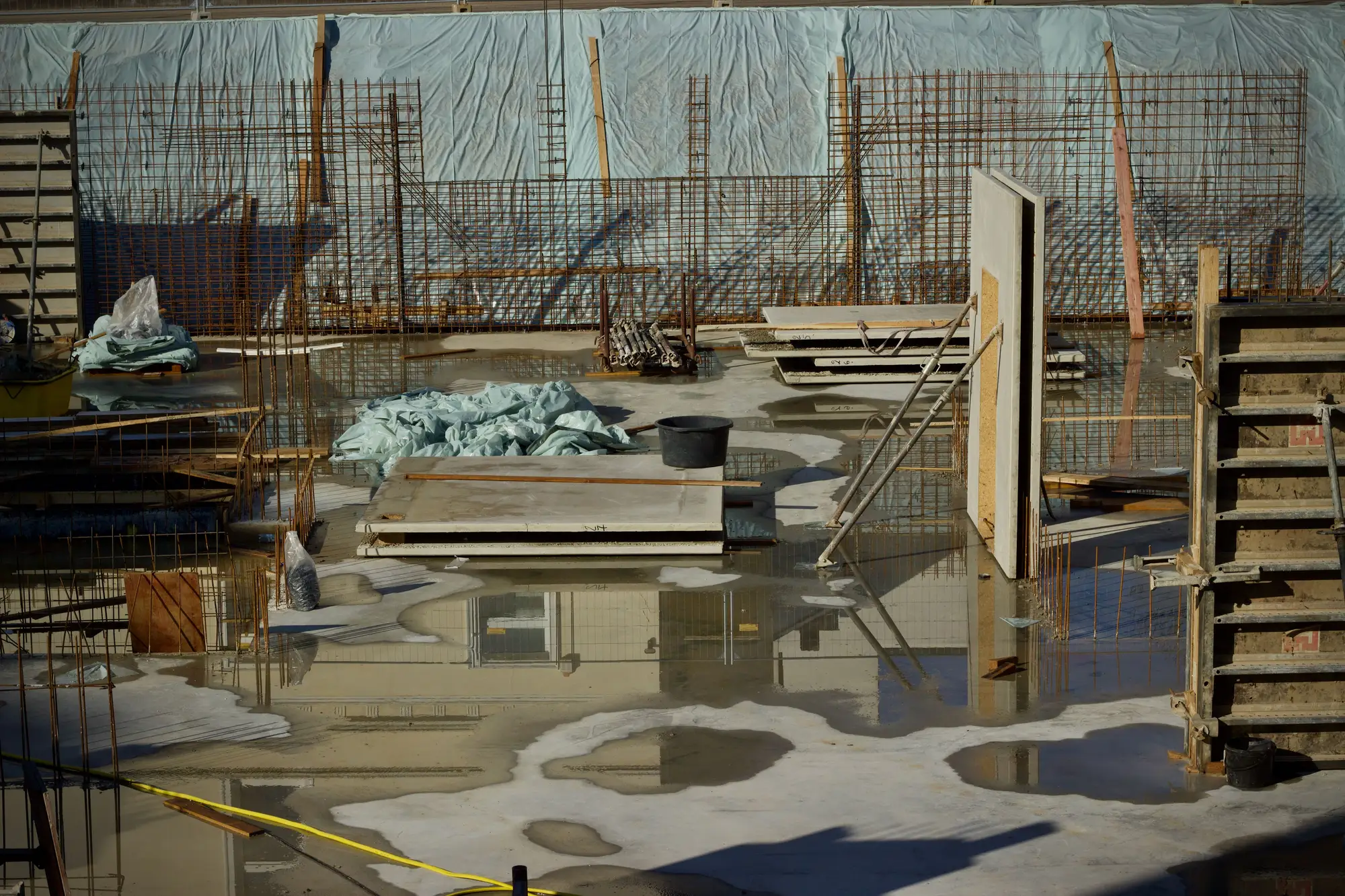
The signals that tend to move a loan from "watch" to "workout" cluster around three things: no plant on site when the schedule says there should be, no visible change in the excavation or framing from one pass to the next, and site conditions that only show up when nobody's been there in a while, standing water pooling where footings should be poured, material staged and untouched, a fence line nobody's moved. Any one of these on its own might just mean the crew shifted to another phase you can't see from the road. All of them together, across several weeks, is a different story.
Why the day count question is the wrong question
Asking "how many idle days before I act" assumes someone is counting those days as they pass. Workout and special-situations officers manage a book of sites and usually learn about a slowdown the way they learn about most things on a construction loan: from the borrower, on the borrower's schedule, in the borrower's language. A draw request can look routine for months after a site has actually gone quiet, because nobody on your side is checking the ground truth between draws unless something else prompts it.
That's the real gap: not knowing there's a reason to worry until the borrower hands you one, usually several weeks after the crew walked off. The day-count threshold itself you can look up in five minutes once you're already concerned.
A standstill flag closes that gap by working off what's visible on site each month rather than what's reported about it. No plant on site, no change since the last pass, water sitting where it shouldn't be: these are exactly the conditions a monthly image pass over the parcel will show, independent of anything the borrower chooses to put in a narrative. For a lender, that's a workout trigger you notice on your own schedule. For a contractor or insurer watching the same parcel for a different reason, the same quiet site reads as a possible re-tender opening rather than a problem to chase down.
If you're the one who has to decide whether a site's gone quiet or just had a slow month, you can learn more about how a monthly standstill flag works before the next draw request lands on your desk.